The three main styles
| Style | What it is | Why people choose it |
|---|---|---|
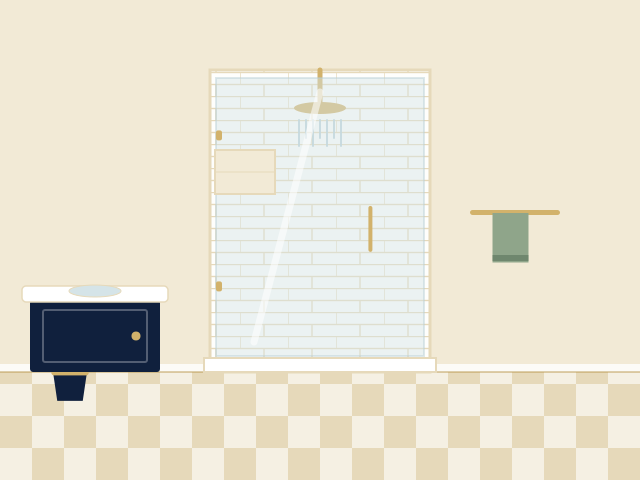
| Framed | Glass held in metal frames on all edges | Lower cost, forgiving fit, sturdy; more metal to clean |
| Semi-frameless | Frame on some edges, frameless door | A middle ground between cost and appearance |
| Frameless | Thick glass held by hinges and clips only | Clean look, fewer places for grime; heavier glass and more precise installation |
Frameless glass is typically 3/8 to 1/2 inch thick tempered glass. Framed doors often use thinner glass, around 1/4 to 3/8 inch, because the frame supplies the strength. Shower glass must be safety glazing (tempered or laminated), so ask your provider to confirm it's marked.
How the door moves matters as much as how it looks
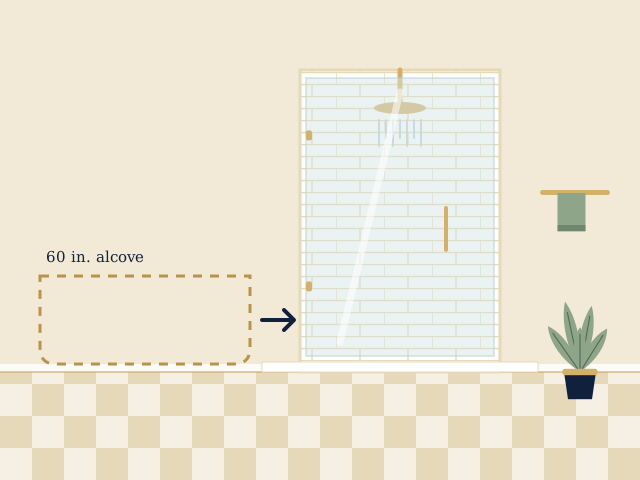
- Hinged door. The classic. It needs clearance outside the shower to swing, and you should check it won't hit the vanity or toilet.
- Pivot door. Swings in or out on pivot hinges at the top and bottom. Good for wide openings; the pivot positions need solid support.
- Sliding bypass. The usual choice for a tub-shower where there isn't space to swing a door. The tracks need regular cleaning.
- Fixed panel only. A single piece of glass with an open entry. Works well for walk-in designs with enough space so water stays contained.
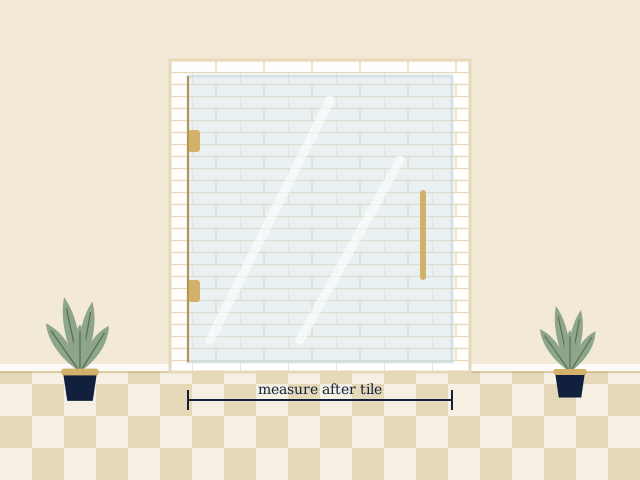
Measure after the tile, not before
Because custom glass is cut for the finished opening, it can't be ordered until the tile and fixtures are in. Walls are rarely perfectly plumb and tile thickness changes the opening by fractions of an inch, so installers typically measure on-site once tile and grout are done. Then the glass is fabricated, which takes time.
That lead time is why many people end up with a plastic curtain for a stretch after their shower is "finished." If you're planning a shower remodel, ask your provider about scheduling the glass measurement as soon as the tile is complete, and consider a temporary curtain.
Details that separate a good install from an annoying one
Hardware finish
Match the finish to your faucet and fixtures. Chrome, brushed nickel, matte black, brass and gold-tone are all common. Mixing finishes can look deliberate, but only when it is intentional.
Water containment
A frameless door has small gaps around the edges. Seals, sweeps and a small curb or an in-shower threshold help. A larger walk-in shower without a door needs to be deeper, or have the shower head oriented away from the opening, to keep water inside.
Wall anchoring
Heavy glass hangs from hinges drilled into the wall. If the wall behind tile doesn't have solid backing, the hardware may not hold. Good providers check for studs or use proper anchors rated for glass weight.
Protective coatings
Glass coatings can help water bead and rinse away, which makes a difference if your water is hard. Hard water is common across the Chicago suburbs, so a squeegee habit and regular cleaning will do more than any coating alone.
Common questions before you order
Questions to ask the installer
- How long from measurement to installation?
- Is the glass tempered, and is that marked?
- What happens if the glass is cut wrong?
- Who removes the old door and hauls it away?
- What's the warranty on the hardware and the glass?
What to have ready
- Rough opening size, or photos of the shower
- Whether tile is finished
- The door style you prefer
- The finish of your faucet and showerhead
- Any special needs for entry (accessibility, bench)
Replacing an old door vs. a new enclosure
Swapping an existing door on a shower you like is straightforward. Building a new enclosure around a new shower is part of a bigger project and can be coordinated as part of bathroom remodelers in Naperville services. If you're considering accessibility, glass choices, thresholds and clear widths are discussed on our accessible bathroom remodeling page.
Glass installation alone doesn't generally involve a permit by itself, but if it's part of a project that does, your provider will coordinate. The City of Naperville residential alteration guidance explains when the city's permit process comes into play.
Spotting, sand and daily use
Mineral spotting is the main complaint about glass, and the Springbrook page has care tips. For busy, wet households, the Centennial Beach page covers shower layouts that handle heavy use.