What "luxury" tends to mean in practice
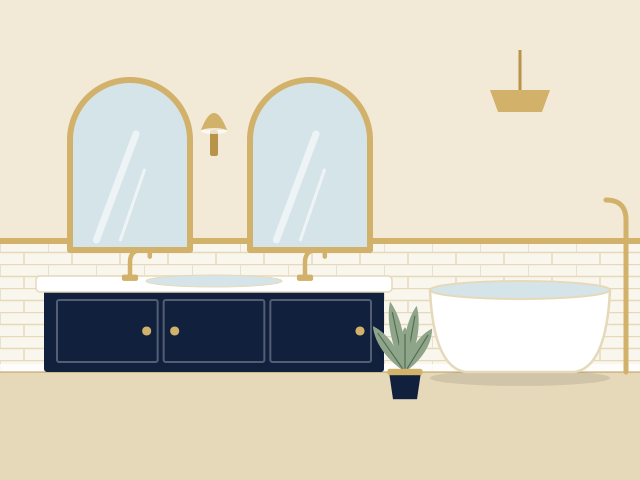
Ask five homeowners and you'll get five definitions, but the common threads are consistent: larger or more complex showers, soaking tubs, heated floors, custom cabinetry, stone or large-format porcelain surfaces and a higher standard of installation. The room is designed around a few key pieces rather than a stack of upgrades.
One honest caution: "luxury" can be a sales word. A line item that says "luxury finishes" isn't a specification. Ask for the product names, the dimensions and the installation method so you know what you're comparing.
The big features, and what they ask of the house
| Feature | What's required behind the scenes |
|---|---|
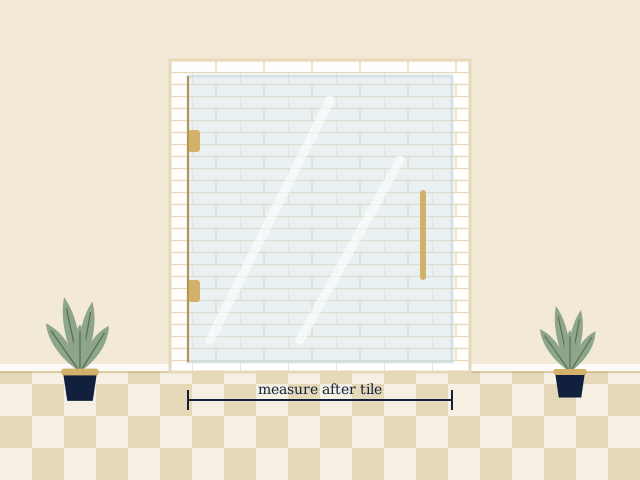
| Steam shower | A generator, a sealed and sloped ceiling, a vapor barrier and a well-planned drain. The enclosure usually goes to the ceiling, with glass and a transom. |
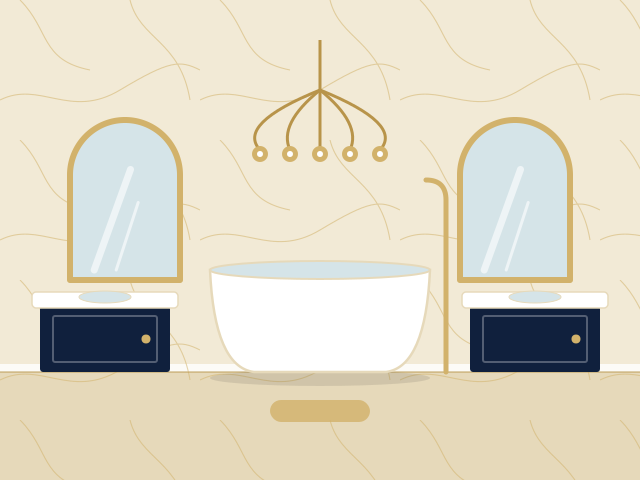
| Freestanding tub | Floor support (some are very heavy), a floor-mounted or wall-mounted filler, and a drain location that matches the tub. |
| Large-slab stone or porcelain walls | Fewer seams but more handling; delivery, templating and flat substrates matter. Lead times are often long. |
| Radiant heated floors | A heating mat or cable under tile, a floor sensor, and a GFCI thermostat on a suitable circuit. |
| Multi-head or body-spray shower | A valve with enough flow capacity, adequate water heater output and careful planning of diverters. |
| Custom vanity and millwork | Measured and built to your wall; plumbing positions need to be fixed before cabinets are made. |
| Digital shower controls and smart fixtures | Power and sometimes network connections near the valve or toilet; plan these before walls close. |
Where high-end projects go sideways
- Selections made late. Special-order tile, slabs and custom glass can take weeks to months. If the order isn't placed until demolition, you'll wait.
- No one owns the schedule. A large project involves plumbers, electricians, tile setters, glass fabricators and cabinet makers. Make sure someone is responsible for coordinating them.
- Hidden structural issues. Heavy tubs or stone floors may require floor reinforcement, and you don't want to discover that after the tub arrives.
- Oversized fixtures in an undersized room. A beautiful tub that blocks the walkway isn't a luxury.
- Underestimating water heating. A soaking tub and a multi-head shower can strain an average water heater.
Make decisions in the right order
- Layout and big fixtures. Tub, shower, toilet and vanity positions come first.
- Systems. Valves, heating, electrical, ventilation and any structural work are set before finishes.
- Surfaces. Tile, stone, wall finishes and glass dimensions.
- Cabinetry and lighting. Custom pieces are designed once the plumbing and electrical are fixed.
- Hardware and accessories. Faucets, handles, mirrors and accessories are picked to match.
The details you'll notice every day
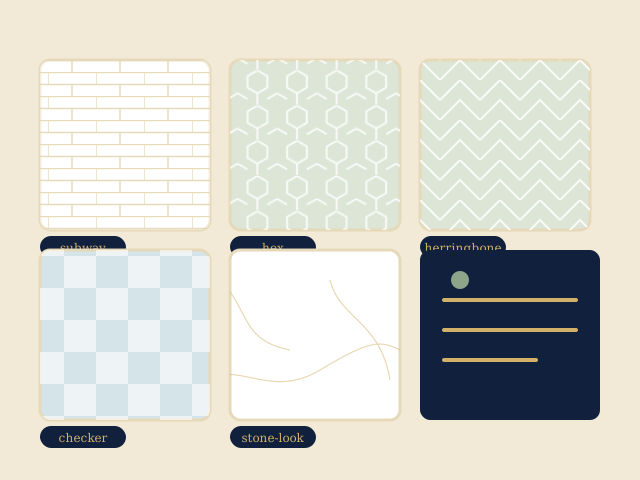
Tile layout is the clearest sign of care. Look for grout lines that align between walls and floor, cuts that are balanced instead of sliced, and edges finished with trim rather than raw edges. Door and drawer fronts should be evenly gapped, glass should be properly aligned and the faucet should feel solid. If you want to see the results before you commit, ask your provider whether they have a recently finished project to show you, and talk to that homeowner if possible.
Many of these finishes build on topics we cover elsewhere: tile installation, glass enclosures and master bathroom planning each have their own considerations.
Permits, contracts and expectations
High-end work almost always includes plumbing, electrical and sometimes structural changes, so a residential alteration permit is typical in Naperville. The city requires drawings that show the scope and wants all subcontractors identified before the permit issues. See the City of Naperville residential alteration guidance. For a large project, make sure the written contract (required in Illinois for work over $1,000) describes materials, allowances and how changes are priced.
When you're ready to talk about high-end bathroom remodeling in Naperville, we'll connect you with an independent provider who can discuss your plans. We don't set their prices or schedule, and you decide who to hire.
Heritage homes and large homes
High-end work in an older house raises different questions than in a larger newer one. The Old Naperville page covers restoration and testing, while Ashwood Park covers primary-suite planning.