Floor materials compared by how they behave in a bathroom
| Material | Water handling | Underfoot | Keep in mind |
|---|---|---|---|
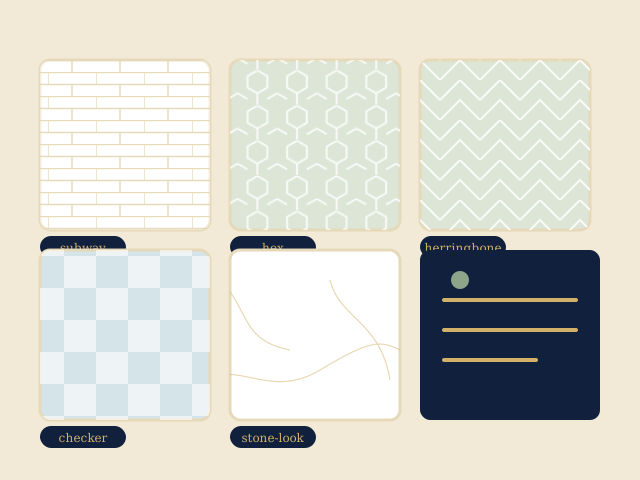
| Porcelain tile | Excellent | Hard and cold unless heated | Grout lines need care; subfloor must be stiff |
| Ceramic tile | Good (check floor rating) | Hard and cold | Not all ceramic is rated for floors |
| Luxury vinyl plank or tile | Very good if the product is waterproof | Warmer and a bit softer | Can dent under heavy furniture; quality varies widely |
| Sheet vinyl | Excellent; few seams | Soft | Needs a smooth subfloor; edges must be sealed well |
| Natural stone | Good if sealed | Cold and hard | Can stain or etch; needs regular care |
| Engineered wood | Fair; not for splash zones | Warm | Better suited to half baths than bathrooms with showers |
We'd steer you away from solid hardwood and laminate in most full bathrooms. They swell when moisture gets under them, and even a small leak can ruin a floor.
What's actually under your floor
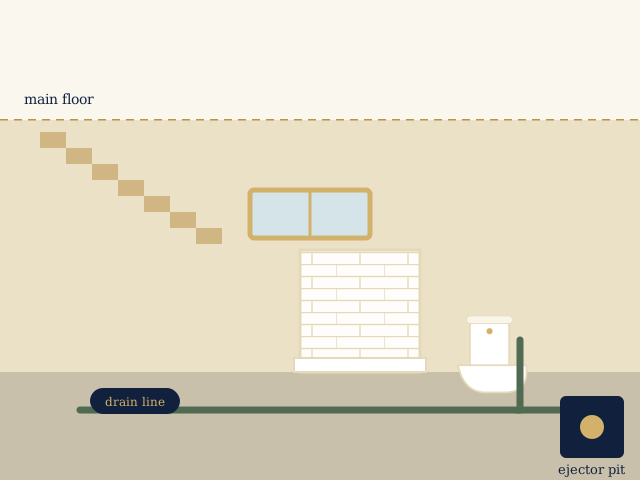
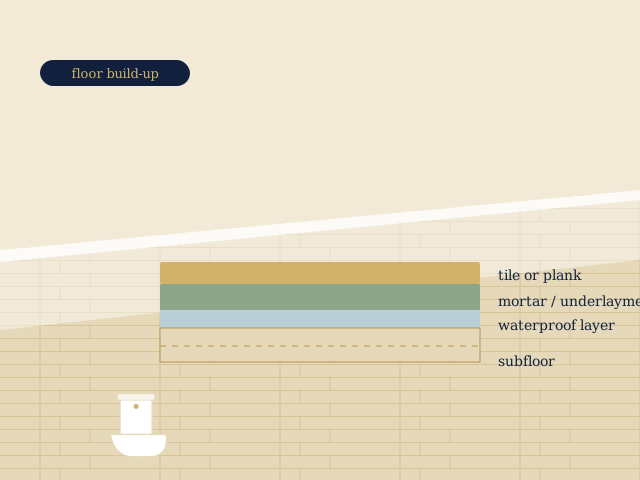
Most bathroom floors have a plywood or OSB subfloor over joists. Installers check it for soft spots, rot around the toilet and tub, and deflection, which is how much the floor flexes between joists. Tile in particular demands a rigid floor. If it feels bouncy, a provider may add blocking or a second layer of plywood or cement board before setting anything on it.
The layers above that depend on the finish:
- Tile: cement board or an uncoupling membrane, thinset mortar, then tile and grout.
- Vinyl plank: a smooth, clean subfloor, sometimes with underlayment, then click-lock or glue-down planks.
- Heated floors: an electric mat or cable under tile, with a floor sensor and a GFCI-protected thermostat.
Floor height: the problem nobody mentions
New flooring raises the surface. Add tile, mortar and underlayment, and you can gain 3/4 inch or more. That affects:
- The toilet flange. If it ends up below the finished floor, the toilet won't seal properly. Installers use flange extenders or reset the flange.
- The door. It may rub, or you may need to trim the bottom.
- Transitions. The step down into the hallway or bedroom has to be dealt with using a threshold or a feathering approach.
- The vanity and tub. They're usually installed first, so tile is cut to fit around them.
- Cabinets and appliances. If you have a washer in the bathroom, make sure it's accounted for.
Slip resistance and safety
For tile floors expected to be wet, the industry recommends looking at the DCOF (dynamic coefficient of friction) rating, with 0.42 or higher a common benchmark for level interior wet areas. Textured vinyl and matte-finish tile tend to offer more grip than polished surfaces. If anyone in your household has balance concerns, our page on accessible bathroom remodeling discusses flooring choices alongside grab bars and thresholds.
Should the floor be done on its own or with other work?
Changing only the floor is a legitimate project. It's also one of the few bathroom jobs that, on its own, doesn't require a permit in Naperville; the city's residential alteration guidance treats flooring as cosmetic work. When the toilet comes out, the vanity is moved or plumbing is changed, the work may cross into permit territory. It helps to confirm with the provider you work with. See the City of Naperville residential alteration guidance for details.
If the floor is only part of a larger project, it makes sense to sequence it with tile, vanity and glass. Our overview of bathroom remodeling projects in Naperville explains how the trades typically fit together, and our bathroom tile installation page covers the setting process in detail.
What an installation looks like
- Remove old flooring and the toilet. The vanity may also be pulled, depending on the plan.
- Inspect and repair the subfloor. Soft or damaged areas are cut out and replaced.
- Prepare and level. Low spots are filled and high spots are ground down so the surface is flat.
- Install the new floor. Tile and mortar, vinyl planks or sheet goods, with expansion gaps as required.
- Finish. Transitions, baseboards, the toilet and any trim go back in.
Care and maintenance
For tile, a pH-neutral cleaner prevents grout from breaking down, and sealing grout where needed helps. For vinyl, avoid abrasive cleaners and standing water at seams. Wipe up water that gets outside the shower. Spills don't ruin a good floor, but constant moisture left along edges eventually will.
Floors that handle wet feet
Sandy, wet feet are a floor's toughest test, and the Centennial Beach page covers slip resistance and easy-sweep surfaces. If you're fitting a floor job around a packed schedule, the Naper Boulevard page has timing advice.